
Why we build educational cities, not just schools
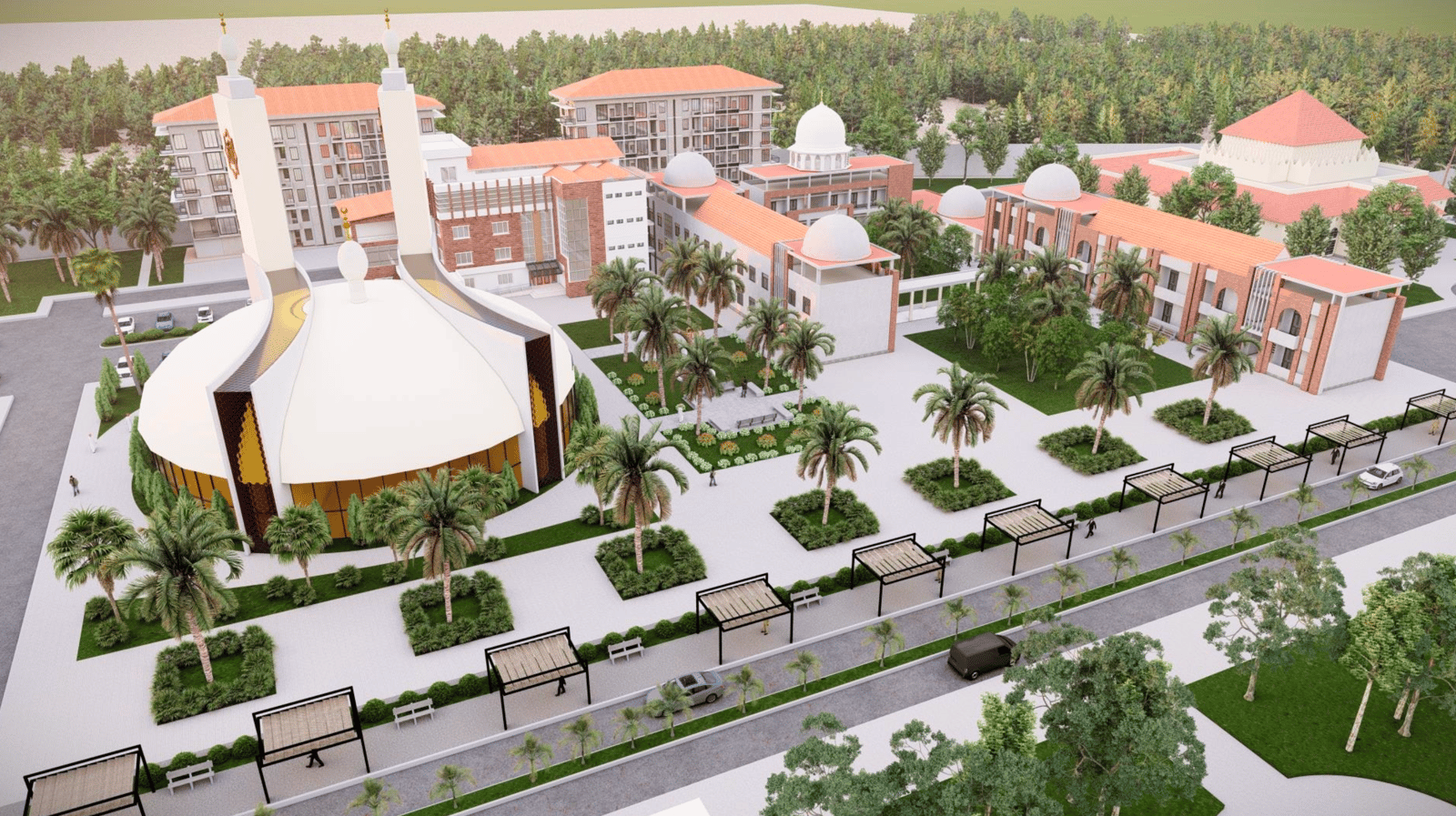
When people ask us why we don't simply build more classrooms, we tell them about the child who learns to read but has nowhere safe to sleep, no clinic when she falls ill, and no path to university when she graduates.
One place, a whole journey
An educational city brings the whole journey of a learner into one place: an international school for the primary and secondary stages, a student boarding facility built to modern standards, a university college for higher and applied studies, a hospital that serves both the students and the surrounding community, a multipurpose hall for cultural and community life, and a mosque that gives the project its spiritual centre.
We are developing this model in Zanzibar and Dar es Salaam, and studying it in Kenya and Rwanda, always in partnership with the local Istiqama associations and within the laws of each country.
Built to last
A building is easy to open and hard to sustain. So before a single foundation stone is laid, we complete the technical and feasibility studies, plan the human resources, and design for financial and administrative sustainability. The goal is not a ribbon-cutting photograph — it is an institution that still serves families in thirty years.
That is why we build cities of knowledge, not just rooms with roofs.